- The Filament Feed
- Posts
- ⬆️ UltiMaker upgrades Cura to version 5.8.0
⬆️ UltiMaker upgrades Cura to version 5.8.0
Also, researchers create a bio ink from mucus to 3D print lung tissue, and scientists create a 3D printed Band-Aid for the heart.

Alex Tripp
August 02, 2024

👋 Welcome to The Filament Feed!
Today’s top stories: UltiMaker releases a new version of Cura, Researchers create a bio ink from mucus to 3D print lung tissue, and scientists create a 3D printed Band-Aid for the heart.
🤩Hobbyist 3D Printing
UltiMaker Launches Cura V5.8.0 - Link
The latest version of UltiMaker Cura introduces several new features and improvements, including enhanced Z-seam control, improved dual extrusion raft settings, and a new search bar for the "Add an offline printer" list. The software also boasts bug fixes, performance enhancements, and updated printer profiles for various models. Cura 5.8.0 also addresses several reported issues, improving overall stability and performance.
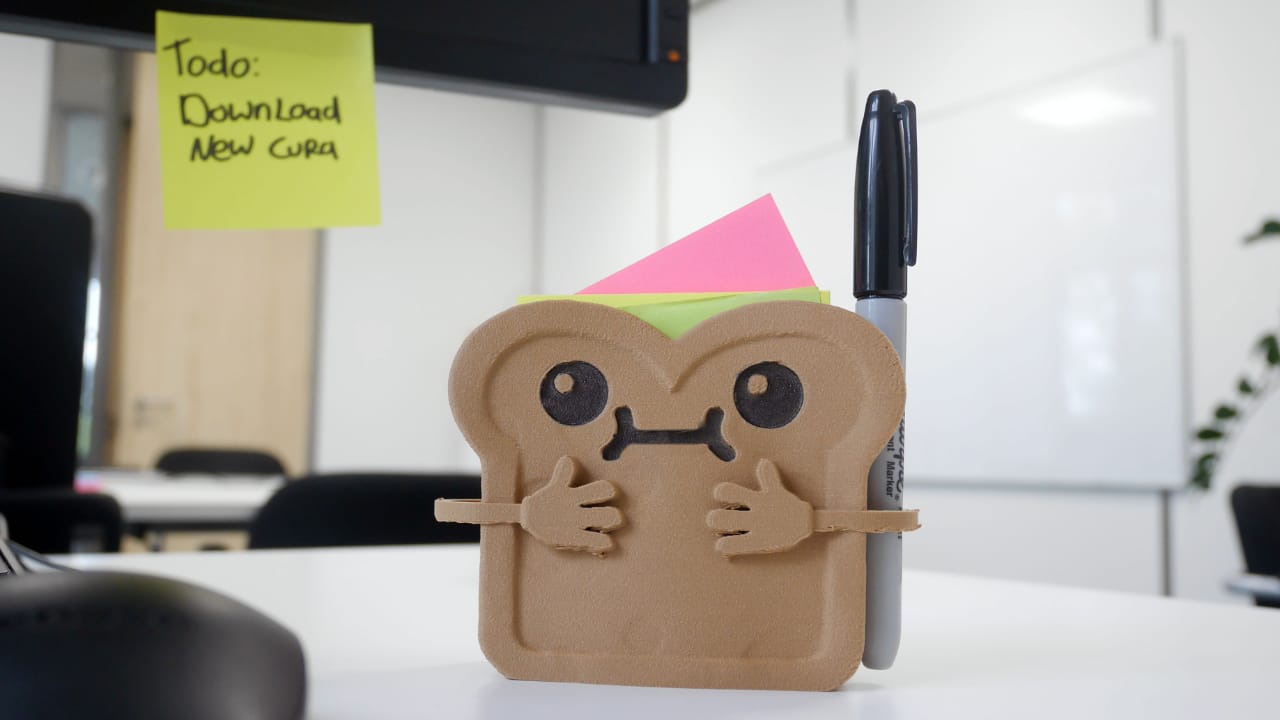
Cura 5.8.0 release notes offer up this toast post it holder to test new Z seam settings.
🏭 3D Printing Industry
Researchers Create Bio Ink to use in 3D Printed Lung Tissue (2 Minute Read) - Link
A team of scientists has created a new bioink made from mucus to 3D print lung tissue. This innovative approach addresses the shortage of donor organs and the limitations of animal testing for lung diseases. The mucus-based bioink supports cell growth and can be used to create 3D models of lungs for research or potentially as a scaffold for tissue engineering. This breakthrough could revolutionize the treatment of lung diseases and accelerate drug development.
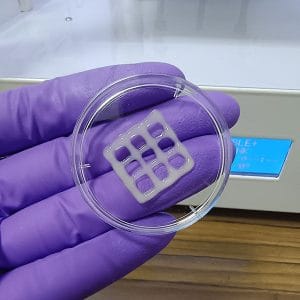
Mucus based bio ink. Courtesy ACS.
Researchers Create 3D Printed Band-Aid for the Heart (3 Minute Read) - Link
Researchers at the University of Colorado Boulder have created a new method for 3D printing materials that are both strong and stretchy, mimicking the properties of human tissues. This breakthrough could revolutionize the field of medicine by enabling the creation of life-like materials for repairing damaged organs and tissues.
The new technique involves a process called CLEAR, which creates entangled molecular structures within the 3D-printed material, similar to the way worms intertwine. This approach results in materials that are significantly tougher and more adaptable than traditional 3D-printed hydrogels.
Potential applications for this new material include heart patches, cartilage replacements, and drug delivery systems. The researchers believe this technology has the potential to transform medical treatments and manufacturing processes across various industries.
🔗 Quick Links
⬆️ Recent Slicer Updates
OrcaSlicer - 2.1.0 Official - 6/21/2024 -(GitHub)
Cura - 5.8.0 - 8/01/2024 (GitHub)
PrusaSlicer - 2.8.0- 7/1/2024 (GitHub)
Bambu Studio - 1.9.3 Public Official- 6/21/24 (GitHub)
📢We love your feedback!
Just reply to this email and tell us what you like or didn’t like. Let us know what sections you are enjoying and what sections just aren’t interesting or sections to add. We want this newsletter to be for the people, and news important to our audience is news important to us.
You can always send an email to me, Alex, at [email protected]
Until tomorrow!
Interested in creating great looking newsletters like this one? Click here to get a 30-day trial and 20% off for 3 months of Beehiiv.com, the best newsletter software online!
Disclosure: We partner with great companies that offer products that help our readers achieve their 3D Printing goals! If you purchase through our partner links, we get paid for the referral at no additional cost to you! For more information, visit my disclosure page. Want to advertise? Reach out to [email protected] for more information.
Reply